
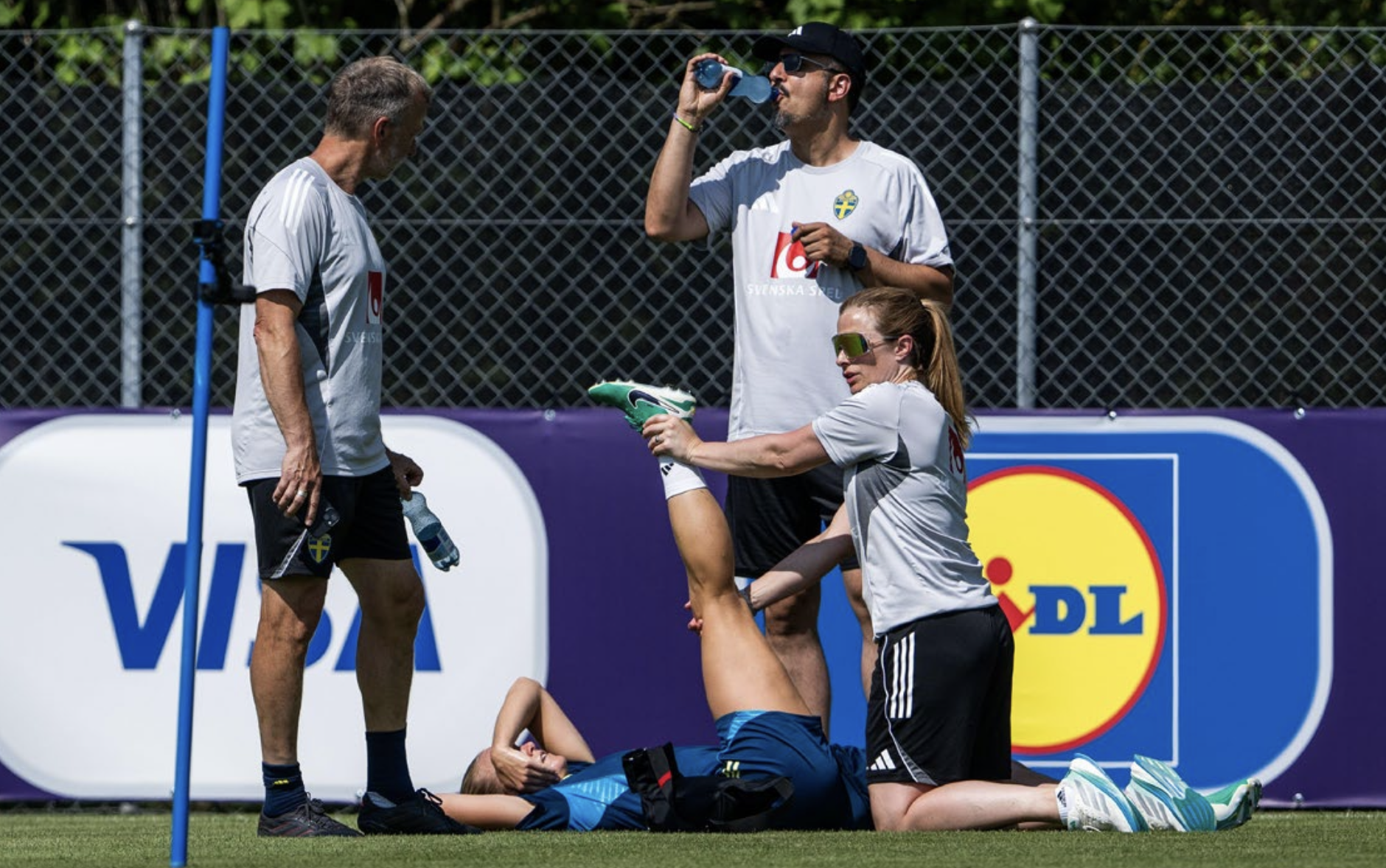
Gaps and our knowledge: High-grade hamstring rehabilitation in elite football
The changing face of hamstring injuries
There appears to be a shift in the profile of hamstring injuries in elite football. The injuries being sustained in 2025 seem to be not only more frequent, but also increasingly severe than previously (Middleton, 2025). Whether this reflects changes in athletic profiles, increasing fixture congestion, the extended periods of additional time at the end of halves or simply the evolving physical demands with changes in game models is unclear.
What is widely accepted though is that the nature of injury is changing — moving away from the traditional sprint-type strains at the musculotendinous junction, associated with short return-to-play timelines, and towards more high-grade injuries involving the intramuscular tendon — the central scaffold within the muscle belly, continuous with the proximal and distal free tendons (Kerin et al., 2023). These are typically classified as BAMIC ‘c’ type injuries (Pollock et al., 2014).
This has created several new challenges: how do we structure rehabilitation for these higher-grade injuries to prevent recurrence — particularly when managing them non-operatively and aiming to optimise the environment for tendon healing?
PLEASE JOIN US